Arthur and Harry’s brotherhood
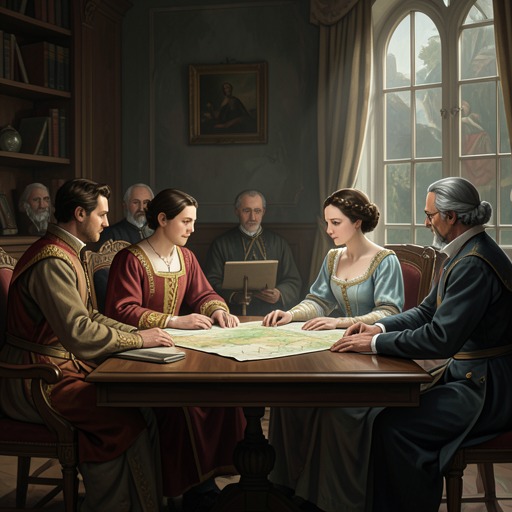
The Constant PrincessArthur, Prince of Wales, and Harry Tudor are presented as brothers divided by unequal expectations and competing places in the royal family. Arthur resents the attention and freedom he believes Harry receives, and doubts that his younger brother is fit to rule. Yet as Arthur faces death, he asks Catalina to marry Harry and become queen. Their brotherhood thus shifts from a source of personal grievance to the premise of a political succession: Arthur entrusts the future he had prepared for himself to the brother he had feared would fail it.
Brothers at a Distance
When Catalina speaks of missing her mother and asks whether Arthur missed his family after being sent away, he answers that he misses his sisters but not his brother. The blunt distinction, delivered so firmly that Catalina laughs, establishes an emotional distance between the brothers before Arthur explains its causes. His grievance is not simply that they have been separated. He sees Harry as someone who repeatedly claims attention that Arthur considers his own due.
Arthur recalls the wedding as an example. In his account, Harry put himself at the center of the celebration, danced at the feast, and drew Margaret Tudor into the performance. Catalina offers a gentler interpretation: Henry VII of England had told Harry to dance, and Harry was merely being merry, as a boy might be. Arthur rejects that defense. To him, his brother’s public display is part of a larger pattern of pushing forward and behaving as though he were already a man. He also reads Harry’s attention to Catalina as evidence that Harry imagines himself in a role that belongs to Arthur, even fantasizing about escorting her down the aisle.
The disagreement exposes how differently the two perceive the same behavior. Catalina sees youthful exuberance and does not take Harry’s supposed romantic pretensions seriously; Arthur sees a rival who takes liberties without being corrected. His irritation is therefore bound up with his own burdens as heir, not only with the scenes he describes. Harry’s ease in the family feels to Arthur like a standing contrast to the discipline demanded of him.
Unequal Preparation and Favor
Arthur measures the brothers’ lives by their preparation for different futures. He says he must learn law and languages, live in Wales, and ready himself for the crown, while Harry remains at court, in places such as Greenwich or Whitehall, amid the attention of the royal household. Arthur sees Harry receiving a horse when he does, a falcon when he does, and access to his tutor, while Harry attempts to outshine him. These comparisons make their difference concrete: Arthur’s education is organized around the duties of an heir, while Harry’s courtly visibility seems to Arthur to bring him privileges without the same discipline.
Catalina reminds Arthur that Harry is only a second son and is not the Prince of Wales. In her view, being liked does not make Harry more important; his position may mean he remains at court precisely because he has no principality to govern. Arthur counters that Harry is everyone’s favorite and that things come easily to him. His complaint is partly about rank and partly about recognition: he believes that he must earn a future that Harry can approach by charm and favor.
Arthur expects Harry to enter the Church, not to marry or rule. He imagines that his brother may remain in England as an archbishop, perhaps even aspire to become pope. Catalina playfully imagines a future in which Arthur and she are king and queen while Harry becomes an archbishop or cardinal. Arthur refuses the lightness of that picture. He predicts that Harry will never grow up and will remain selfish, blaming their father and grandmother for granting him whatever he asks. Those judgments are Arthur’s, shaped by resentment and by the pressure of his own position; the account does not establish them as an impartial measure of Harry’s character.
The Deathbed Request
Arthur’s final appeal makes the contradiction in his feelings unmistakable. Though he has spoken of Harry with hostility, he asks Catalina to marry him, become queen, and have their children. He connects the request to England’s need for a great queen and to his conviction that Harry is not fit to rule without guidance. Catalina is to teach him, continue Arthur’s work of strengthening the country, and defend it against the Scots. Arthur’s words turn a brother he had treated as a source of frustration into the successor on whom the kingdom’s future depends.
Catalina is shocked. She protests that Arthur hates Harry, that Harry is still a child, and that she loves Arthur. Arthur nevertheless insists that Harry will be king and that she must become queen for his sake. The plea does not erase their earlier conflict; it gives that conflict a final consequence. Arthur cannot personally govern the future he has described, so he asks Catalina to carry his hopes into a marriage with the brother whose character he has spent much of their shared life condemning.
A Brotherhood Recast as Succession
The request also changes the meaning of Harry’s position as second son. Earlier, Arthur treats that status as evidence that Harry is less important and will have a separate, clerical future. At the deathbed, it is precisely Harry’s eventual kingship that Arthur invokes. Catalina’s marriage to him is imagined as a way to secure the crown and provide the children Arthur had hoped for. The brothers’ relationship consequently reaches beyond private feeling: their unequal upbringing and Arthur’s distrust become part of the crisis of succession that his last request seeks to address.
Arthur’s later absence remains present in Catalina’s understanding of her life with Harry. She waits years for the promised marriage to become real, remaining constant through poverty and uncertainty; when she is eventually crowned beside Harry, she understands the queenship as the destiny she has long pursued. The evidence does not show the brothers reconciling or establish what Harry thought of Arthur. Instead, it leaves their relationship suspended between Arthur’s harsh predictions and his final act of trust in the woman he asks to guide his brother. Their brotherhood is therefore defined not by mutual understanding, but by the unresolved transfer of Arthur’s hopes and responsibilities to Harry through Catalina.